1 / 5
 Blatrixo Machine
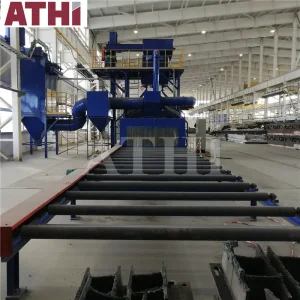
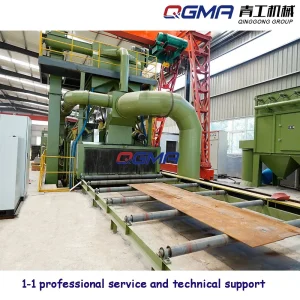
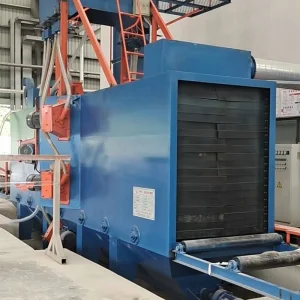
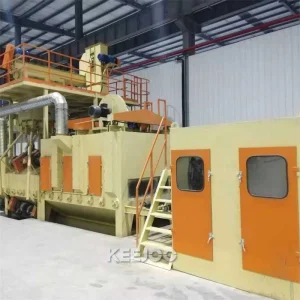
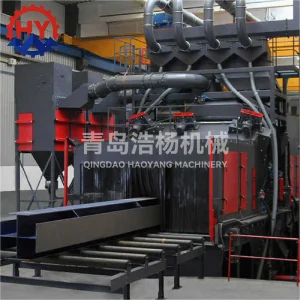
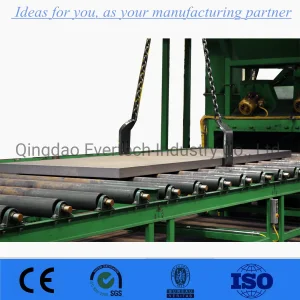
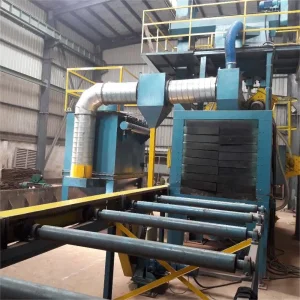
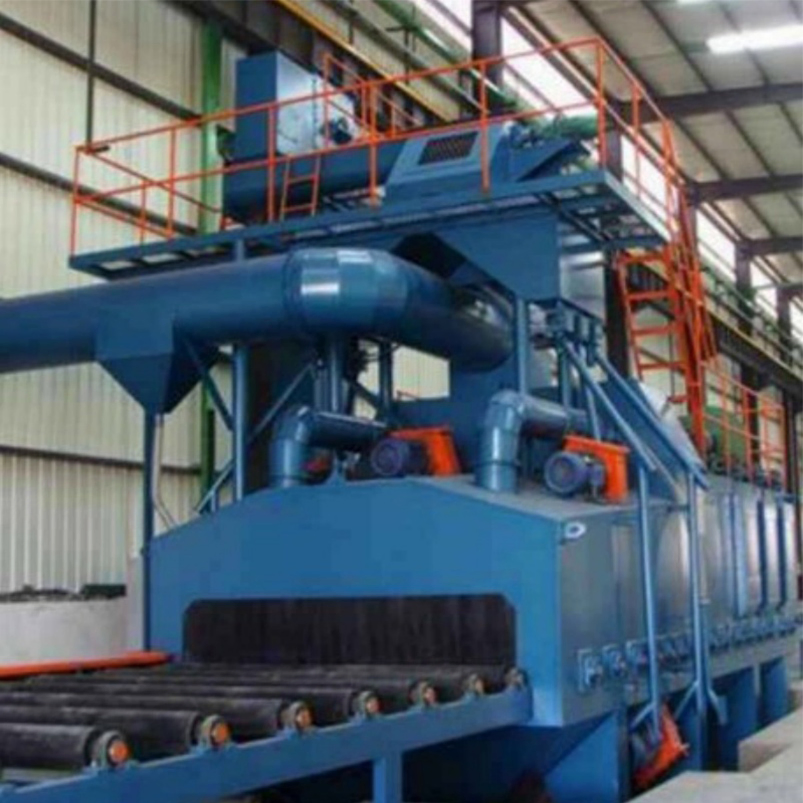
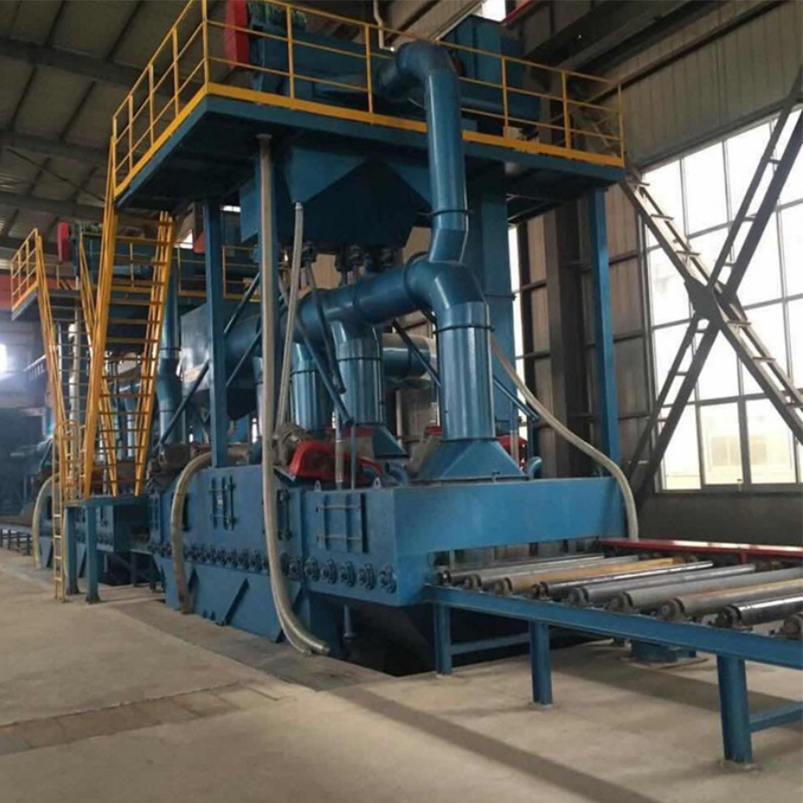
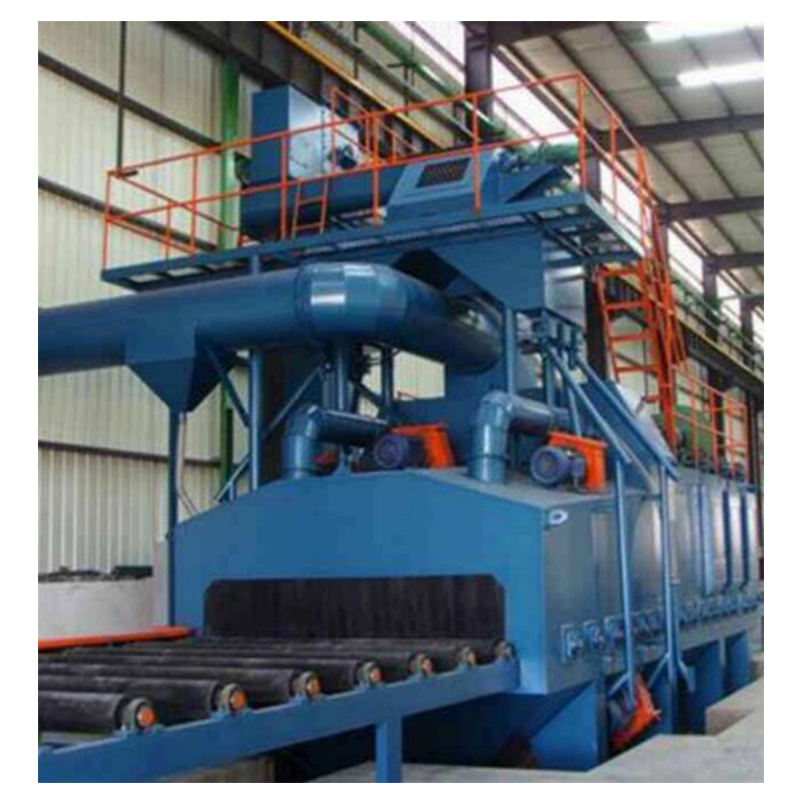
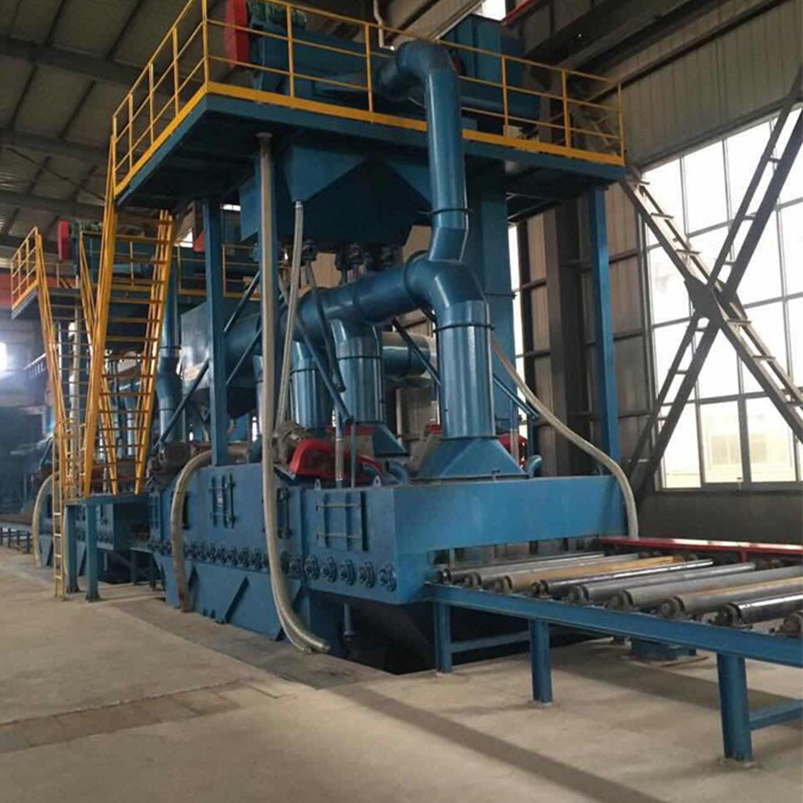
When workpieces enter the main shot blasting chamber via the roller conveyor mechanism, the shot blasters start operating in sequence. After shot blasting treatment, most of the oxide scale, dirt and other attachments on the workpiece surface are thoroughly removed, achieving a surface cleanliness grade of Sa2-Sa2.5. The entire workflow runs in a continuous and cyclic manner.
The pellets used in the shot blasting system are collected and processed by the recycling system for repeated use. Scattered pellets are conveyed to the bucket elevator through the screw conveyor systems. The bucket elevator lifts them to the BE separator, where dust and impurities are separated from qualified pellets, which are then stored for subsequent supply.
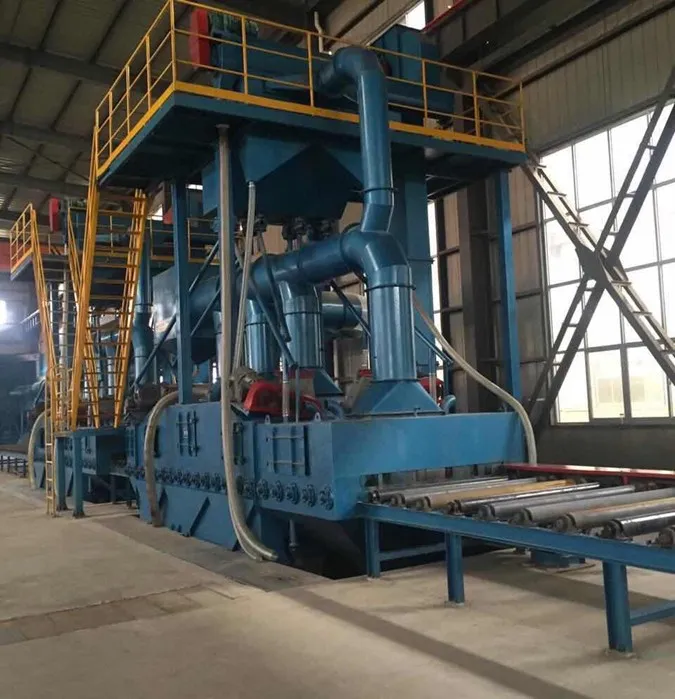
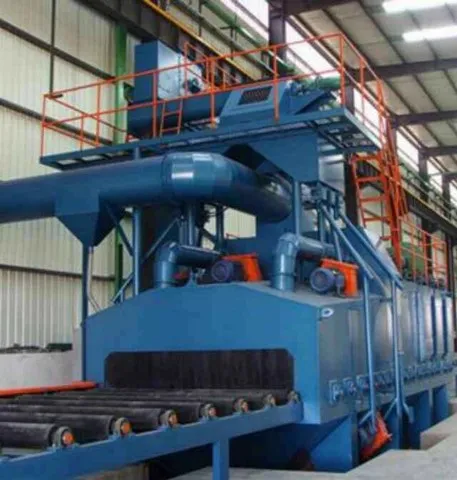
To handle the large amount of dust generated during rust removal, the machine is equipped with a high-efficiency LT-48 pulse jet filter cartridge dust collector, ensuring high dust removal efficiency and convenient maintenance.
| Item | QXY-1500 | QXY-2000 | QXY-2500 | QXY-3000 | QXY-3500 | QXY-4000 |
|---|---|---|---|---|---|---|
| Shot blasting unit | 4~6 | 6 | 6 | 6 | 6~8 | 8 |
| Motor Power (kw) | 15~22 | 15~30 | 15~30 | 22~37 | 22~37 | 22~37 |
| Cleaning speed | 1 - 5 meters per minute (Grade Sa2.5) | |||||
| Steel Plate Width (mm) | 1000-1500 | 1000-2000 | 1000-2500 | 1000-3000 | 1000-3500 | |
| Thickness (mm) | 5-32 | 5-32 | 5-32 | 5-60 | 5-60 | |
| Control System | PLC controlled with Touch Screen & Frequency Speed Control | |||||
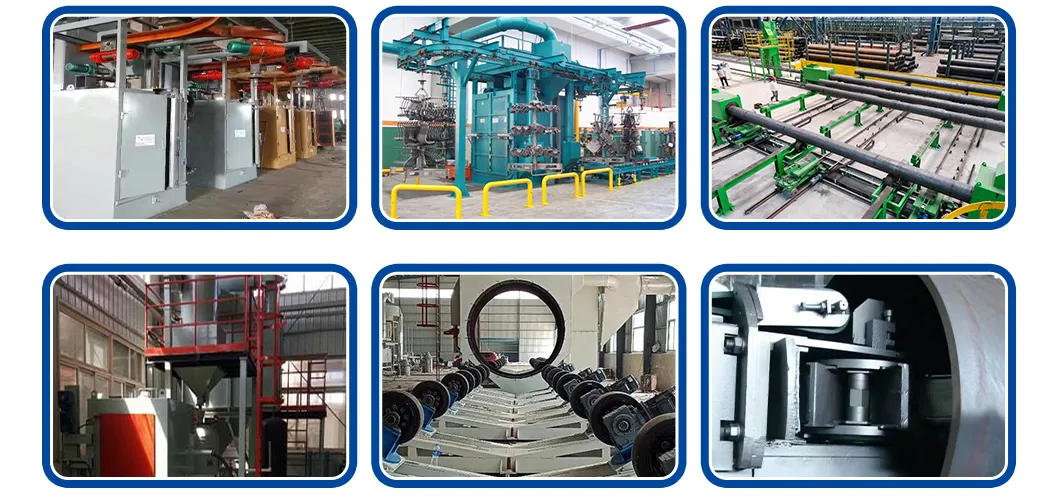
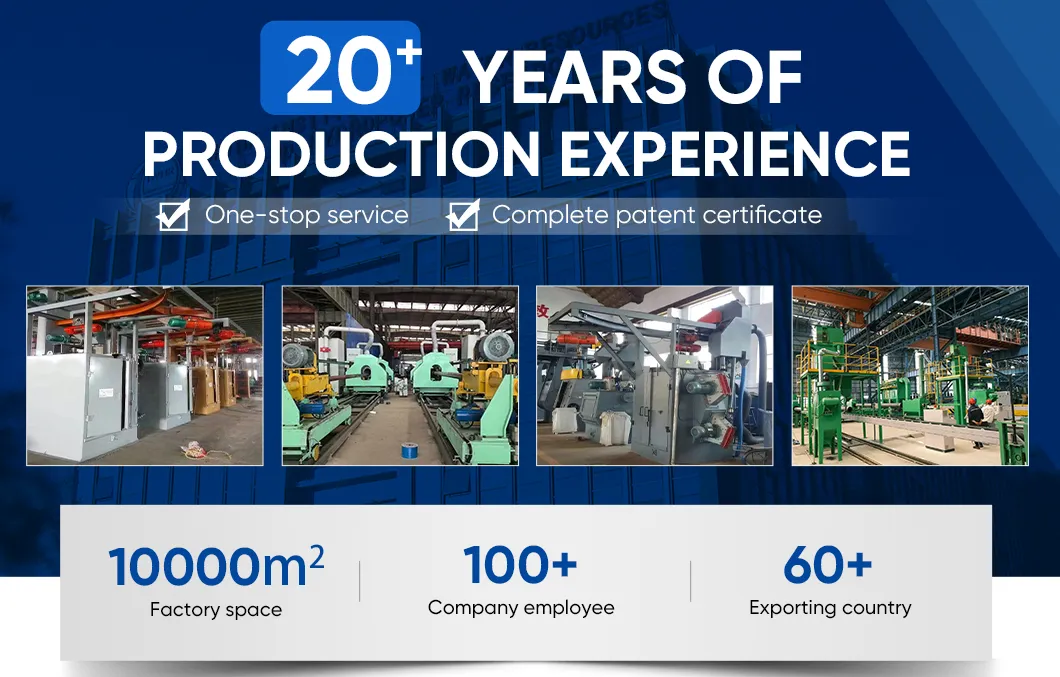
Specializing in automated shot blasting machines and surface treatment equipment for steel sections and plates. With over 20 years of manufacturing experience, we provide complete solutions for surface cleaning, rust removal, and coating preparation. We offer nearly 20 different models designed to meet diverse industrial needs.
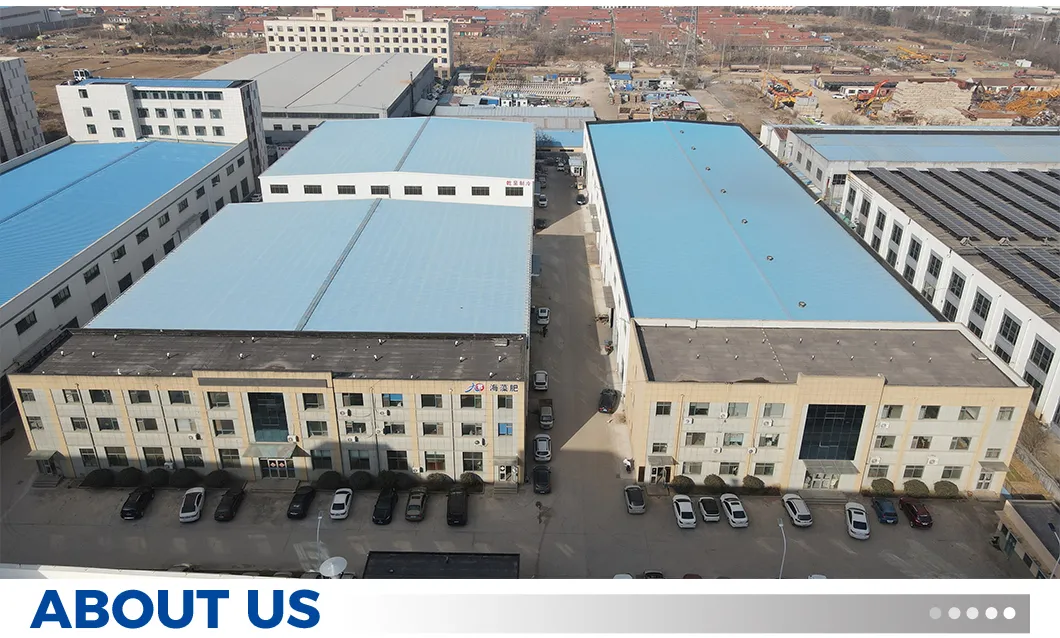
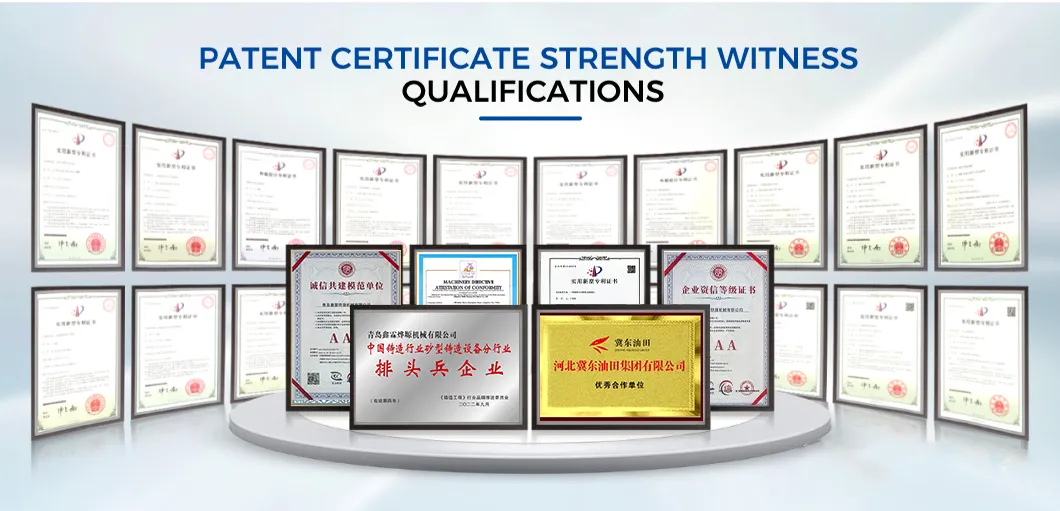
Our operations are certified under ISO 9001:2015, possessing strong R&D capabilities and multiple patents. The products comply with EU Machinery Directive requirements including CE certification (EN ISO 12100:2010, EN 60204-1:2018).